



-
×
 Palliative Wound Care: Management of Complex and Unique Wound Challenges at the End of Life - Laurie Klipfel
1 × $85.00
Palliative Wound Care: Management of Complex and Unique Wound Challenges at the End of Life - Laurie Klipfel
1 × $85.00 -
×
Certificate Course in Cognitive Behavioral Therapy for Insomnia (CBT-I): Evidence-based Insomnia Interventions for Trauma, Anxiety, Depression, Chronic Pain, & more - Colleen E. Carney & Meg Danforth
1 × $125.00


Original price was: $99.00.$33.00Current price is: $33.00.
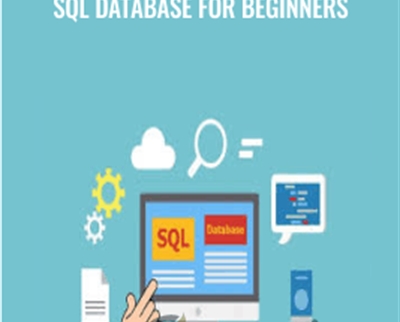
Master SQL Database Creation and Development with Guru Martin Holzke.
Level up your expertise with the SQL Database for Beginners course—now only Original price was: $99.00.$33.00Current price is: $33.00. on GiOlib.com! Join a community of smart learners and access 60,000+ expert-led digital courses across Uncategorized. Save over 80% and master new skills at your own pace.
Have you started learning about SQL Databases, only to get stuck while trying to teach yourself? Or are you a developer whose never felt totally at ease with database work? Have you been looking for an easy and comprehensive way to go beyond the basics and start using SQL Databases in a professional and efficient way? Perhaps, you just want to get your SQL queries to work the first time!
In this thorough and easy-to-follow course, database expert Martin Holzke shows you how to achieve success. From the very first lesson, you'll learn how to correctly structure your database, how to author efficient SQL statements and clauses, and how to manage your SQL database for scalable growth. This course gives you all the information you need to successfully start working with SQL databases and make use of the database in your applications.
Martin will invite you to work along with him as he demonstrates the ins and outs of database management and database for application development. If you're developing web or mobile apps or even games there is much to be learned about this important facet of development. If you're brand new to SQL Database work, or a professional developer looking to learn the best practices, then SQL Database for Beginners is the perfect course for you!
Course Curriculum
Relational Databases
- What are Databases? (7:24)
- What is the Role of Databases in Application Programming (7:56)
- Tables and Relations (14:40)
- Primary and Foreign Keys, and Other Constraints (12:00)
- Chapter 1 Lab Exercise
SQL Querying
- What is Querying (2:40)
- The ANSI SQL Standard (3:59)
- DML, DDL and More (5:07)
- Common Query Tools (8:27)
- Chapter 2 Lab Exercise
Your First Queries
- The SELECT Statement (6:17)
- Limiting Output Columns (4:57)
- Formatting and Sorting Output (15:22)
- Column Aliases (6:19)
- Chapter 3 Lab Exercise
Filtering your Results
- The WHERE Clause (4:57)
- Creating a Filter Condition (7:19)
- Multiple Filter Conditions (8:13)
- More Filter Operations (11:21)
- Chapter 4 Lab Exercise
Consolidating your Data
- Counting Records (5:14)
- Common Aggregate Functions: SUM, AVG, MIN, MAX (8:06)
- Do's and Don'ts when Consolidating (8:38)
- Union and Other Multiset Consolidations (10:57)
- Chapter 5 Lab Exercise
Grouping your Data
- The GROUP BY Clause (9:59)
- The HAVING Clause (5:36)
- Do's and Don'ts when Grouping (6:09)
- Chapter 6 Lab Exercise
Joining Tables
- Table Aliases (6:54)
- Inner Joins (14:58)
- Outer Joins (14:08)
- Self Joins (8:00)
- Complex Multi Table Joins (19:57)
- Chapter 7 Lab Exercise
Subqueries
- Filtering Using Subqueries (14:09)
- The EXISTS Clause (6:49)
- Subqueries as Alternatives to Joins (7:09)
- Derived Tables (5:39)
- Chapter 8 Lab Exercise
Manipulating your Data
- The INSERT Statement (20:46)
- The UPDATE Statement (12:50)
- The DELETE Statement (6:26)
- Chapter 9 Lab Exercise
Transaction Control
- What are Transactions? (5:24)
- Initiating a Transaction (4:17)
- The COMMIT and ROLLBACK Commands (4:22)
- Chapter 10 Lab Exercise
Creating Database Objects and Adding Business Logic
- Creating Tables (16:39)
- Creating and Using Views (9:15)
- Developing and Calling Stored Procedures (10:41)
- Implementing Triggers (9:25)
- Chapter 11 Lab Exercise
- Lab Solutions
Get SQL Database for Beginners – Anonymous , Only Price $37
Tag: SQL Database for Beginners Review. SQL Database for Beginners download. SQL Database for Beginners discount.
Master SQL Database for Beginners and accelerate your growth with GiOlib.com! For a limited time, enjoy premium digital learning with these exclusive benefits:
-
Lifetime Access: Your library never expires.
-
80% Savings: Exceptional quality without the premium price tag.
-
Instant Start: Download and learn the moment you buy.
-
Total Security: Safe payments and device-agnostic viewing.
Related products

Original price was: $399.99.$125.00Current price is: $125.00.
Original price was: $372.00.$72.00Current price is: $72.00.
Uncategorized
Disordered Eating Behaviors: Identify and Treat the Underlying Trauma – Lori Kucharski
Original price was: $199.99.$85.00Current price is: $85.00.
Uncategorized
Original price was: $199.99.$85.00Current price is: $85.00.
Uncategorized
Optimizing Compliance and Maximizing Revenue for Ophthalmology and Optometry – Jeffrey P. Restuccio
Original price was: $199.99.$85.00Current price is: $85.00.
Uncategorized
Legal Risks in Nursing Documentation – Use Extreme Caution When Skimming the Facts – Rosale Lobo
Original price was: $69.99.$40.00Current price is: $40.00.
Original price was: $299.99.$94.00Current price is: $94.00.
Uncategorized
Proven Fall Prevention Strategies: Exercise, Meds Management and Home Modification – Trent Brown
Original price was: $69.99.$40.00Current price is: $40.00.