




-
×
 Cardiopulmonary Therapy for the Rehab Professional: Therapeutic Interventions for All Aspects of Cardiac Care - From ICU to Outpatient - Cindy Bauer
1 × $84.00
Cardiopulmonary Therapy for the Rehab Professional: Therapeutic Interventions for All Aspects of Cardiac Care - From ICU to Outpatient - Cindy Bauer
1 × $84.00 -
×
2-Day: Certificate in Stroke Rehabilitation: Best Practices for Rapid Functional Gains and Improved Outcomes - Ben - Benjamin White
1 × $94.00
-
×
Impending Doom: Crisis Prevention and Management in the Deteriorating Patient - Rachel Cartwright-Vanzant
1 × $85.00
-
×
Mike Dillard - Elevation Income Course
1 × $71.00
 Cardiopulmonary Therapy for the Rehab Professional: Therapeutic Interventions for All Aspects of Cardiac Care - From ICU to Outpatient - Cindy Bauer
  Mike Dillard - Elevation Income Course

Original price was: $49.00.$14.00Current price is: $14.00.
Focusing provides powerful tools for releasing blocks to action. A “block to action” is an experience which can be described as “I want to do it, but I don’t do it.” Some examples of blocks to action are: procrastination, writer’s block, inability to get organized.
Level up your expertise with the Ann Weiser Cornell – Releasing Blocks to Action course—now only Original price was: $49.00.$14.00Current price is: $14.00. on GiOlib.com! Join a community of smart learners and access 60,000+ expert-led digital courses across Everything Else. Save over 80% and master new skills at your own pace.
Focusing provides powerful tools for releasing blocks to action. A “block to action” is an experience which can be described as “I want to do it, but I don’t do it.” Some examples of blocks to action are: procrastination, writer’s block, inability to get organized.
Purchase Ann Weiser Cornell – Releasing Blocks to Action courses at here with PRICE $49 $14
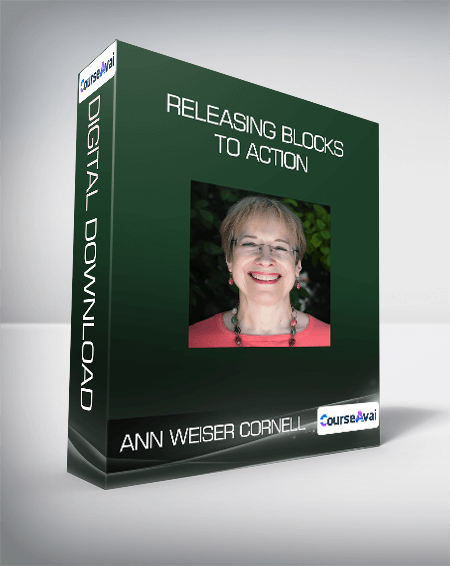
Ann Weiser Cornell – Releasing Blocks to Action

Focusing provides powerful tools for releasing blocks to action. A “block to action” is an experience which can be described as “I want to do it, but I don’t do it.” Some examples of blocks to action are: procrastination, writer’s block, inability to get organized.
Get Ann Weiser Cornell – Releasing Blocks to Action download
In working with the action block with Focusing, we assume the existence of two parts: the part that wants to do the action and the part that doesn’t want to do the action. We guide the Focuser to listen compassionately to the part that doesn’t want to do the action. Three typical patterns may emerge, although a particular session may not follow any pattern. These are: the pattern of protection, the pattern of rebellion, and the pattern of wanting something else. There may also be an Inner Critic who needs to be heard with compassion.
An action block is the felt experience of being unable to do an action. This can be phrased as “I want to do it, but I don’t do it.” The action may be a single action, such as a phone call to a publisher, but more often it is a general type of action or activity, such as “making phone calls,” or “getting organized,” or “writing.” If a person has the experience that all or many types of action are difficult to get started or to accomplish, this is called “procrastination” or “being stuck.”
In working with Focusers, it is useful to identify whether situations that they are facing are action blocks. A young man, for example, tells me that he feels frustrated and lonely for the lack of having any fulfilling relationships with women. As we discuss this, it becomes clear that he is aware of certain actions that he could be taking in order to meet more women, and to get better acquainted with the women he meets, but he isn’t taking those actions. So we can approach this issue as an action block. By contrast, another man says he has done everything he knows how to do, and nothing works. There is no action he feels blocked about in this regard. So for him we will need a different approach. [In Treasure Maps to the Soul, the second man would be working with the Mountain Top (Unfulfilled Desire) rather than Swamp (Action Blocks). Note added 2005.]
Once we characterize an issue as an action block, we can assume the existence of two parts (or “aspects of inner experience”): the part that wants to do the action, and the part that doesn’t want to. Typically, the Focuser is identified with the part that wants to, and dissociated from the part that doesn’t want to. Let us discuss these terms further.
Identification, Dissociation, and the Middle Way
We can describe three types of relationship with inner experience. The first, called “identification with a part,” is the experience of being one’s feelings. The person says, “I am sad,” “I am angry,” “I am afraid.” When a person says “I am…” then he is identified with the experience of which he is speaking. When a person says “I am sad,” then she experiences sadness as identical with herself.
The truth is, part of her is sad, and part of her is more than that. But she has become identified with the part that is sad. Instead of being aware of her wholeness, she is aware only of a part.
Identification with a part can feel like “taking sides” internally. This person has taken sides: “I need to get rid of this part of me that’s so angry.” A person is identified with a part if he finds himself unable to be compassionate with someone or something, especially with another part of himself. “I am impatient with my fear” needs to become “Part of me is afraid and part of me is impatient with that.”
The second type of relationship with inner experience is called “dissociation from a part.” If “identification” is “me,” “dissociation” is “not-me.” “I am not sad.” “I am not angry.”
One might, of course, truly not be sad. Then “I am not sad” is simply true. But if one is sad, somewhere – if something in there is sad – and one does not know it, then one has dissociated from one’s sadness.
A dissociated part is something which belongs to you, which is yours, yet you do not recognize it. You are not aware of it. You do not feel it. Or, if you feel it a little, you may be feeling much more strongly that you reject, deny, judge, or despise it.
Identification and dissociation often go together. If you feel both fear and excitement, and you become identified with the fear (“I am afraid”) then you are almost certainly going to be dissociated from the excitement. Only after you disidentify from the fear (“Part of me is afraid”) do you have the inner space to feel the excitement (“And another part of me is excited”). Or you may be identified with the Critic, taking sides to judge and criticize some other part of you which has been dissociated.
The middle position, neither “me” nor “not-me,” is technically called disidentification and association, but we can call it, more simply, “being with.” In the middle position, I am with something that I feel. A part of
Get Ann Weiser Cornell – Releasing Blocks to Action download
Purchase Ann Weiser Cornell – Releasing Blocks to Action courses at here with PRICE $49 $14
Master Ann Weiser Cornell – Releasing Blocks to Action and accelerate your growth with GiOlib.com! For a limited time, enjoy premium digital learning with these exclusive benefits:
-
Lifetime Access: Your library never expires.
-
80% Savings: Exceptional quality without the premium price tag.
-
Instant Start: Download and learn the moment you buy.
-
Total Security: Safe payments and device-agnostic viewing.
Related products

Everything Else
Original price was: $1,497.00.$137.00Current price is: $137.00.

Everything Else
Original price was: $197.00.$37.00Current price is: $37.00.

Everything Else
Brian Tracy – 21st Century Sales Training for Elite Performance
Original price was: $997.00.$47.00Current price is: $47.00.
Everything Else
Lisa Sasevich – Speak- to -Sell Virtual Bootcamp – Spring 2015
Original price was: $997.00.$85.00Current price is: $85.00.
Everything Else
Original price was: $2,995.00.$137.00Current price is: $137.00.

Everything Else
Jacob Sokol – Quadruple Your Coaching Biz 19 expert sessions
Original price was: $300.00.$43.00Current price is: $43.00.

Everything Else
Original price was: $997.00.$81.00Current price is: $81.00.

Everything Else
Original price was: $297.00.$47.00Current price is: $47.00.